Agentic AI refers to AI systems that act autonomously to achieve goals with minimal human input, using reasoning and planning to solve complex tasks. Unlike traditional AI, these agents can perceive, decide, act, and learn on their own, making them useful for everything from simple customer service to advanced automation in healthcare, finance, and beyond.
Everybody talks about agents AI. Some of the time I have the impression that not everyone talks about the same thing. Which made me write this.
What is Agentic AI?
Agentic AI (AAI) refers to AI systems that can act autonomously to achieve specific goals with minimal human supervision, using reasoning and iterative planning to solve complex, multi-step problems. So there we have some definition which we can now take apart.
- Act autonomously
- minimal human supervision
- Reasoning
- Iterative planning
- complex, multi-step problems
Autonomy is the defining feature of AAI. Traditional systems need constant guidance or follow predetermined rules. Agentic systems are given a goal and can make decisions on their own.
How does Agentic AI work?
Agentic AI operates through a four-step process that enables comprehensive problem-solving:
Perceive: AI agents gather and process data from various sources. These include sensors, databases, and digital interfaces. They extract meaningful features and identify relevant entities in their environment.
Reason: A large language model acts as the orchestrator or reasoning engine. It understands tasks and generates solutions. It coordinates specialized models for specific functions like content creation or visual processing.
Act: Agentic AI integrates with external tools and software through application programming interfaces. It can execute tasks based on the plans it has formulated. Built-in guardrails ensure proper execution.
Learn: The system continuously improves through feedback loops, adapting its strategies and responses based on outcomes and new information.
So you also compare it with the OODA loop (if you are not familiar with it: OODA stands for Observe, Orient, Decide, Act and is a concept around situational awareness).
Why is it called Agentic?
If you read the last part you will have noticed that there is sometime a plural agents.
In the context of Agentic AI, an AI agent is an autonomous system that perceives its environment, reasons about what actions to take, acts to achieve specific objectives, and learns from feedback, all with minimal or no human intervention.
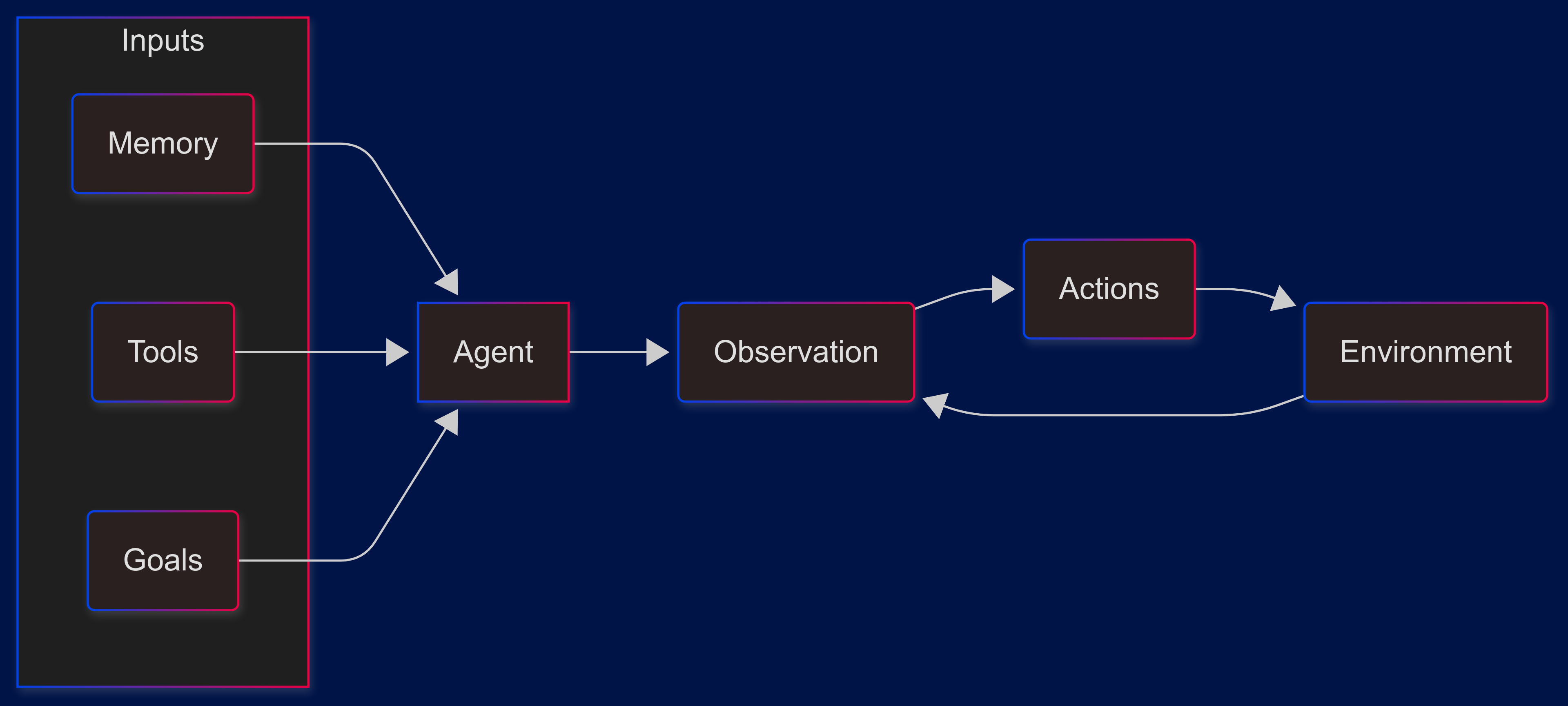
This naming draws from the broader concept of agency in philosophy and cognitive science, where an agent is any entity capable of acting on its own behalf.
What do you use Agentic AI for?
Agentic AI is used across a wide spectrum of applications, ranging from simple, reactive tasks to highly complex, autonomous decision-making in dynamic environments.
At its most basic, Agentic AI powers reactive agents that respond instantly to user queries or environmental triggers—like answering customer service questions, recommending products in e-commerce, or providing real-time fraud alerts in banking. These systems can handle straightforward, well-defined tasks by analyzing current inputs and delivering immediate, context-aware responses, often improving user satisfaction and operational efficiency.
Moving up in complexity, AAI systems with limited memory learn from past interactions to inform future decisions. In healthcare, for example, these agents continuously monitor patient data from wearable devices, detect anomalies, and alert care teams to potential health risks. In logistics and supply chain management, Agentic AI predicts inventory needs. It optimizes delivery routes based on real-time data. The AI proactively addresses disruptions like supplier delays or weather events. In cybersecurity, these agents autonomously scan networks for threats, detect anomalies, and deploy countermeasures without human intervention, greatly enhancing organizational security.
At the most advanced level, Agentic AI orchestrates multi-step, multi-agent workflows that require sophisticated planning, reasoning, and adaptation. In customer service, agents not only resolve complex issues but can also access live data, analyze customer history, and autonomously execute solutions like issuing refunds or updating records. In finance, Agentic AI manages algorithmic trading, dynamically adjusting strategies in response to market shifts, and performs real-time risk analysis. In software development and IT operations, these agents analyze code, identify bugs, generate fixes, and automate deployment pipelines.
Agentic AI is also driving innovation in scientific research, where agents design experiments, analyze results, and even recommend new research directions or materials. In public safety, Agentic AI systems monitor city infrastructure, detect incidents, coordinate emergency responses, and predict risks by analyzing diverse data streams. In video communication, Agentic AI enables real-time translation, adaptive streaming, and context-aware moderation, enhancing collaboration and accessibility. At every level, Agentic AI systems utilize machine learning and reinforcement learning. They continuously improve, becoming increasingly adept at tackling complex challenges. These challenges evolve across all industries.

 usinglight
Leave a comment